
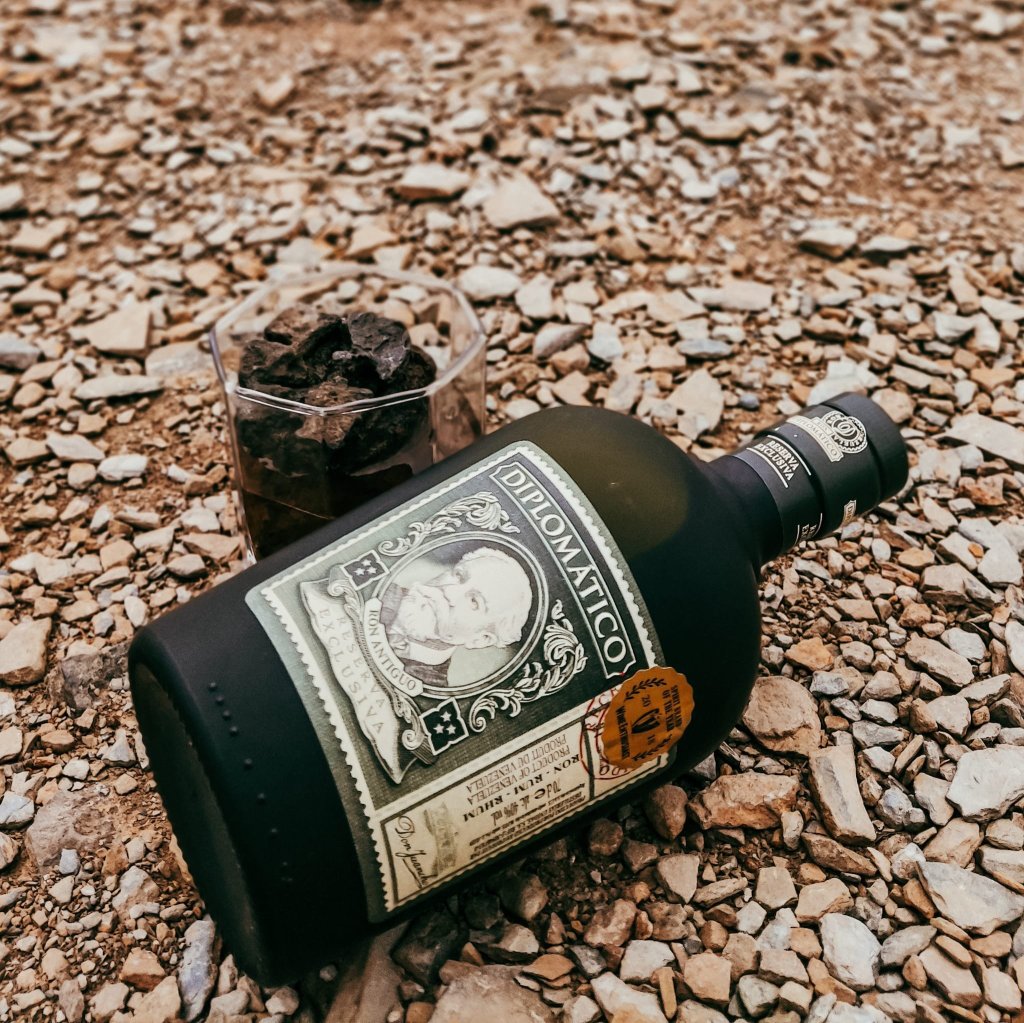
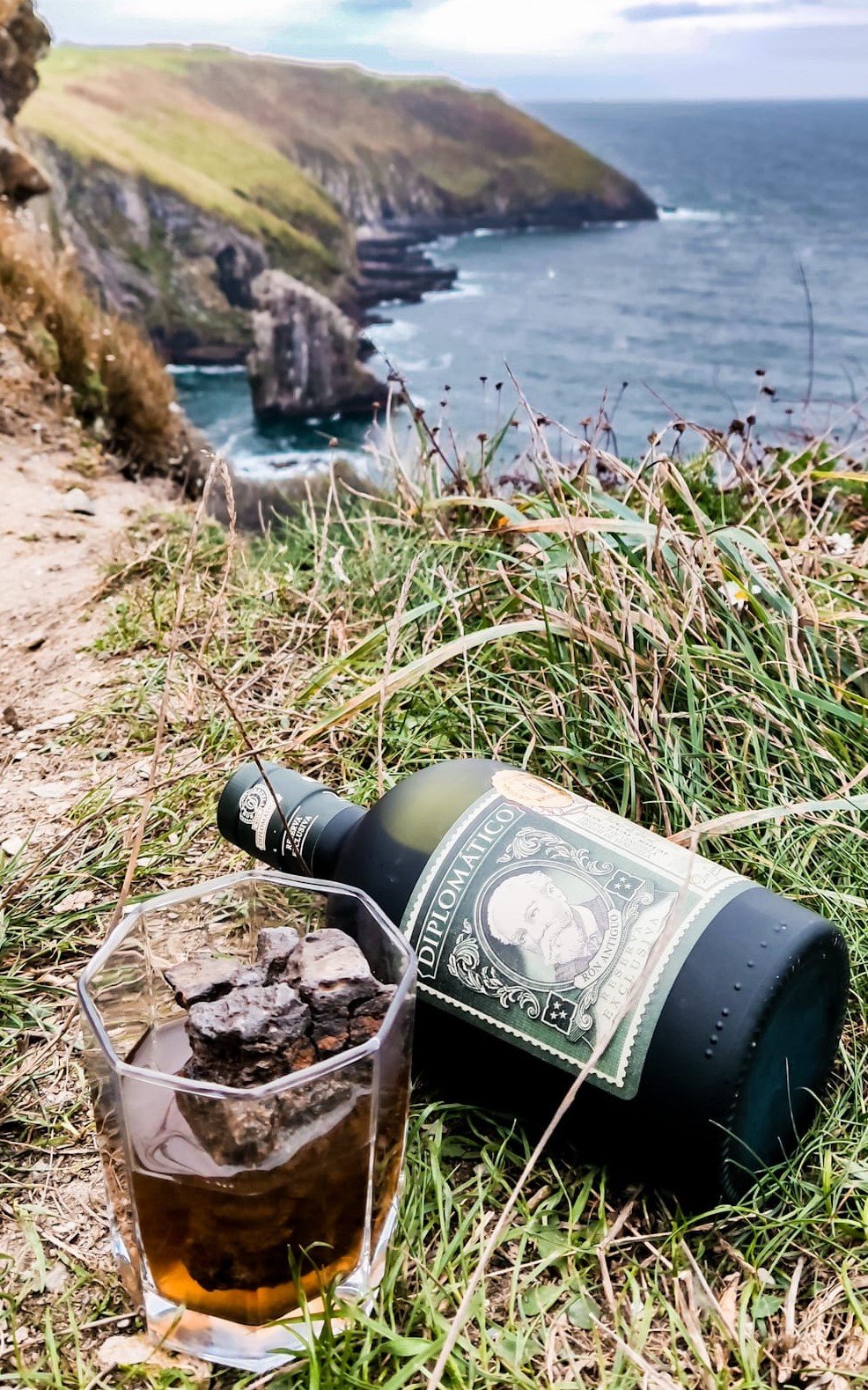
Fernando Garrido Diaz is one of the five Ireland national finalists in the zero waste cocktail competition representing Co. Cork. On the 8th of November, Fernando will compete against four other contestants (three from Dublin and one from Galway) in a cocktail competition organised by Diplomático and Co with their program Artisan of taste. And here we have a small interview with him.
What can you tell us about Artisan of taste?
Artisan of Taste is an amazing program with different educational activities created by Diplomático and Co focused on finding different mixologists and bartenders that can complete their challenge: create a sustainable cocktail using homemade techniques while supporting local producers.
What do you think of the food industry waste nowadays and how the hospitality businesses could work in a ‘’zero waste movement‘’ together?
As everyone probably knows, the food industry has become incredibly wasteful mainly due to industrialised food systems using only what is considered as ’’perfection’’ in food. This means that food products that don’t look perfect, have proper flavours, or characteristics are discarded. We also shouldn’t forget about the packaging waste that is often used in the food industry for the perfect presentation for the customers.
Fortunately, it seems like the word sustainability is on everyone’s lips nowadays and people are more concerned about it than in the past. However, a big change is still needed in both the hospitality sector and at home to focus not solely on using paper straws but to see the big picture. One of the initiatives that make me proud is the one offered by Diplomático and Co with the artisan of taste.
Why do you think people should buy local products?
Nowadays, there is a big separation between people and the food we consume because of industrialisation. Children don’t have the same awareness about food production if we compare it to the education received in the past. This competition is a good way to repair that detachment from food production.
Also, buying locally is the best way to support your local economy, improve your health and do your part to protect the environment, reducing the cost of production and transport. We cannot forget that it’s always better to use products in the season to enjoy the natural flavour at its best!
How could mixologists reduce their waste?
One of the easiest ways to become more sustainable in cocktail making is to use your ingredients to their full potential. For example, we use lots of citrus fruits to obtain their juice. If we peel the rind before squishing our fruits, instead of throwing it away, you can create amazing syrups, garnishes or Oleo Saccharum. Instead of throwing away your used coffee grinds, you can infuse them with tequila or vodka and some sugar to get your coffee liqueur.
Another way to reduce waste is trying to find alternative ways to chill drinks as it takes a lot of water and energy to make ice that in the end ends up down the sink. An alternative way to chill the drinks is pre-batching the cocktails and storing them in the fridge or, for example, freezing the pit of the avocados or other fruits that we consume and using them as ‘’Rocks’’. In this way, we can give a sustainable repurpose to the pits that would be otherwise thrown away.
Finally, one of my favourites, the dehydrated fruit is ideal for making garnishes which is another amazing technique to reduce the food waste from the venues. In my case, when I want to give an amazing garnish to my drinks I smash up my dehydrated fruit and the result is an extraordinary powder! We only need to use a low energy way to dehydrate in our venues or at home to make it sustainable.
Tell us about which one was your inspiration for this cocktail competition and how you did it sustainably
In my cocktail, I tried to include a few of the techniques that I mentioned before. First, I wanted to give an elegant view and keep all the aromas and flavours of Rum diplomático using Mantuano (perfect rum created to be mixed in cocktails) and Reserva exclusiva (A rum that you could easily drink by itself as a very good whisky). The combination of those two rums gives you amazing aromas and flavours of orange, chocolate, molasses, vanilla, nuts and a delicate spicy touch. Regarding the colour, those rums give you an amazing amber-red colour that was reminding me of lava.
This made me think if there is any volcano in Venezuela that could represent the name of my cocktail. The answer is no. However, there are ‘’fake’’ volcanoes called coal-fires and after a little bit of research… Voilá! I found the name of the most famous one, SANARÉ, which translation is “I will heal’’. I think this name suits perfectly the competition of artisan of taste.
To create a connection between Ireland and Venezuela, I used one fruit from each country that grows under different conditions and can perfectly combine with this rum. In the case of Ireland, I chose apples that at this time of the year are amazing seasonal products combining perfectly with this type of rum. I decided to use all the ‘’ugliest apples’’ that usually customers wouldn’t buy because of not being pretty or too mature. Next, I combined this fruit with cinnamon and vanilla for the elaboration of a homemade Kombucha. I love this combination of ingredients which reminds me of my grandma baking apples with Rum and cinnamon at this time of the year when I was a kid. She used to use the ugliest ones as well.
Regarding the fruit from Venezuela, I decided to choose orange. This citric fruit combines perfectly with this rum and is consumed by a lot of people around the world. Even though it is not a local product, there is a way to be more sustainable with it: use the skin of the oranges after squeezing them to obtain our morning juice. I decided to grind the orange skin and mix it with sugar to obtain an amazing flavoured sugar perfect to use with cocktails and desserts.
For last but not least, the cocktail presentation and chilling the drink! In my case, I needed a clear surface to show the beautiful colour of the serve. I had an idea of reusing a bottle by cutting it and upcycling it into a glass. However, after multiple attempts, I wasn’t able to cut those bottles perfectly at home. I decided to use a regular glass instead. At least they can be reused every day if we don’t break them! I also decided not to use ice to chill the drink to avoid the waste of water and diluting our serve. That’s why I found the perfect substitute: A frozen lava Rock! Any type of rock could be used for this purpose as long as it’s well cleaned before. I got mine from an old aquarium. Another benefit of choosing this type of rock is the beautiful black colour that combines perfectly with the colour of the serve.
I hope that my cocktail and this interview inspires some other mixologists, bartenders and venues to make this world a little bit more sustainable and use what we have better.

